"I regret to say that we of the FBI are powerless to act in cases of oral-genital intimacy, unless it has in some way obstructed interstate commerce." — J. Edgar Hoover
Much has already been written on Auckland Mayor Len Brown's extra-marital affairs - maybe a bit too much. He's exercised a rather silly lapse of judgement - especially when it involves an employee close to the city council - and he's reached that age where he probably needs to buy himself a very fast car to channel his 'energies'.
At the same time, it seems those who have lobbed political grenades at Mayor Brown have found the hard way that grenades can bounce back in the faces of the lobbers. Whaleoil, the blogger who published the scandal, denies that the purpose of it was to destroy Brown's mayoral career. Brown's arch-rival John Palino admits to have met Brown's mistress, Bevan Chuang, but also denies his own involvement in the scandal.
To make things more interesting, one of Palino's more 'enthusiastic' campaign managers, Luigi Wewege, has been found out to be a Walter Mitty/John Davy type who was warned about by National Party sources as 'toxic'. One of these sources has gone in to bat for Chuang, who it emerges was cajoled into revealing the affair by Team Palino, and has strongly criticised Whaleoil for his dirty tricks tactics.
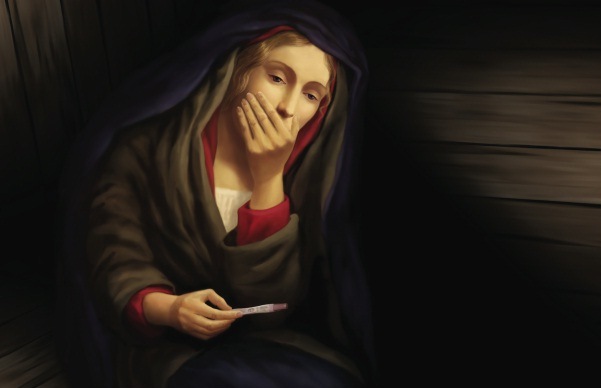
Their Tony Blair "selfie" was recently banned from public display after advertisers refused to display the image. Here Peter Kennard and Cat Phillips speak out about the censorship of their work.
With the passage of the GCSB Amendment bill by just a couple of votes, such a move towards mass surveillance has polarised New Zealanders. Those in favour of this creeping illiberality typically invoke the hoary old "if you have nothing to hide, you have nothing to fear" argument, which has been popularly attributed to a number of repressive dictators in history. It's been mentioned as early as the late 19th century:
"If these people had done bad things they ought to be ashamed of themselves and he couldn't pity them, and if they hadn't done them there was no need of making such a rumpus about other people knowing."
Just to rub it in, the NZ Police have declined to press charges involving the GCSB wilfully straying outside of its lawful jurisdiction, claiming there was no evidence of 'criminal intent'. To privacy advocates, it gives the impression of a Government agency given carte blanche to be a law unto itself.
Not surprisingly, hacker collective Anonymous has announced it's expanding its operations in NZ. Already they've defaced the web sites of the GCSB and various Government ministers who voted for the law changes, and have promised more. Kim Dotcom, a cause celebré of the Internet privacy movement, has come out against such defacement, saying it only gives supporters of cyber-snooping more ammunition.
On the other hand, with the Key Government seemingly unstoppable and a political Opposition still to get its act together, JFK's wisdom comes to mind: "Those who make peaceful revolution impossible, will make violent revolution inevitable." Only this time, there are no guns or bombs, only laptops and the Internet.
Already, those who increasingly speak out against the Government - Natasha Fuller, Mike Joy, Jon Stephenson - are come down upon with the full force of its propaganda machine. Recent proposals to ban protests against offshore oil drilling only consolidate such intolerance of dissent. If Singapore is "Disneyland with the Death Penalty" according to William Gibson, then NZ is increasingly becoming Rainbow's End with Roving Spheres.
And then there were three...
It was only a matter of time before the Leader of the Opposition, David Shearer, would throw in the towel. From Day 1, he gave the impression of being parachuted into the role, and struggled to come across as coherent. And the timing of his resignation was a bit off. Yet if he makes it to Cabinet, he'd probably be effective in the Foreign Affairs portfolio, his old stomping ground.
Jostling for the newly vacated seat are David Cunliffe, Grant Robertson, and Shane Jones, who each represent different segments of the public voter base.
David Cunliffe
Cunliffe comes across as the "broad church" candidate who happens to be very focused about his policy platform, with a Fulbright scholarship and Harvard MPA (not MBA) to boot. He manned up and unbundled Telecom's local loop in 2006 in the face of resistance from the finance sector, which had profited handsomely from a cartellised telco market. To his detractors, he comes across as an aloof prima donna, and seems to be far more popular with the party rank-and-file and public than within his own caucus. Still, much of the NZ Labour caucus is weighed down with dead wood, and he probably has the best chance of taking on John Key at his own game.
Grant Robertson
Robertson is seen as the "beltway insider". I'm not a big fan of the term "beltway" in a NZ context, because it's been invoked to dismiss burning issues like the GCSB as not being on the public radar. He has a good grip on how the machinery of Government works, and holds his own in the Parliamentary debating chamber. Supposedly counting against him is his open homosexuality, following the controversy over the legalisation of same-sex marriage. Such arguments are playing the man instead of the ball (and Robertson is a keen follower of the rugby scene), though, and I'm firmly of the view that Robertson's sexual orientation is a non-issue. If anything potentially counts against him, it's his Wellington insider status which only those with a fascination for politics are seen to be interested in. He's still a solid candidate who's done the hard yards in his electorate Wellington Central, and would make the perfect deputy leader.
Shane Jones
Jones is the "red-blooded" or "Waitakere Man" candidate who was in the news for the wrong reasons not too long ago, namely for charging porno flicks to the taxpayer. He has swing voter appeal, where modern elections are supposedly won and lost, and like Cunliffe went to Harvard and has a grounding in business. However, his red-bloodedness has gotten him offside with environmentalists and women, and his relations with the Green Party will prove rather interesting if he becomes a Cabinet minister.
While Jones is an outside chance for the leadership, he'll still be effective on the front bench despite his personal flaws.
More pork
Finance Minister Bill English doled out a NZD $30 million subsidy to mining giant Rio Tinto, in order to settle an impasse over the future of the Tiwai Point aluminium smelter, which has been under the threat of closure and hence massive job losses and the associated divider effect. Another side effect of Tiwai Point's closure would be a sudden drop-off in power usage - the smelter consumes about 14% of NZ's total electricity generation - which would flood the electricity market and cause power prices to fall.
As there's no guarantee the smelter will remain open after 2017, the subsidy isn't about smelter jobs and the Southland economy. It's really about fattening up Meridian Energy, the provider of electricity to the smelter, for floating on the sharemarket. While public services like the Department of Conservation are laying off staff and we're lectured about the cupboard being bare, the Government of the day somehow manages to find large sums of money to subsidise highly profitable multi-nationals. Bill English, from an old-school Treasury background, is telling us to do as he says, not as he does. If it isn't socialism for the rich and austerity for the rest of us, I don't know what is.
If a Labour-led Government was in the same position, it might have screwed down Meridian Energy or put in a jobs readjustment plan for a post-smelter future, both of which would be anathema to the increasingly discredited and hypocritical Wall Street orthodoxy that those currently in power cling to at all costs.
In a direct follow-up to my previous post, my latest print design is out now on CafePress:
And what better way to kill two birds with one stone? Both the reality TV series The GC, and the Government Communications Security Bureau (GCSB) are right now prime objects of scorn. The former, because it's a Jersey Shore rip-off at heart. And the latter, because the New Zealand Government is extending the powers of the cyber-snooping agency onto its own citizens.
The revelation that investigative journos have been placed on a Defence Force list of subversives can only pour petrol on an already burning issue - the issue of mass surveillance, which seems to be getting to the point where it's breaking out of the beltway and into the public consciousness. With enough momentum, it could even become the No Nukes of the Smartphone Age.
There are genuine terrorist threats to chase after - but the beefing up of the GCSB's powers is less about countering terrorism, and more about senior political figures trying to save both their arses and their faces at once. The sinking of the Rainbow Warrior by French secret agents - the first and only international terrorist attack in NZ - was quickly solved with good old-fashioned police detective work. Some degree of beefed-up security agencies was a given in the wake of 9/11, but there comes a turning point where temporary states of emergency become permanent ones, and that's where the misuse and abuse starts.
With the NSA contractor Ed Snowden turning rogue and spilling the beans on the PRISM network he was once party to, things are certainly ramping up in our own backyard as well.
The Government's embarrassment over the Kim Dotcom affair and Operation 8 have led it to change electronic spying law to effectively legitimise illegal actions by intelligence and law enforcement agencies.
And just to rub it in, Silicon Valley's most powerful companies would be forced to open their data to the GCSB under the proposed Telecommunications Interception Capability and Security (TICS) Bill. Prime Minister Key has already played the 'soft on terrorism' card, which doesn't seem to wash with many.
There's a school of thought that there was a full-on dossier on the 9/11 plot before it happened, but that it was not acted on by President Bush Jr despite the necessary intelligence apparatus being in place. And there were claims that Russia did actually have some good old-fashioned intelligence on the Tsarnaev brothers who pulled off the Boston Marathon bombings, but that the FBI, CIA and Homeland Security didn't take them seriously. If true, all this can only stoke suspicions that we're in a perpetual war with Eastasia.
In the words of American founding father Benjamin Franklin, "those who would give up essential liberty to purchase a little temporary safety, deserve neither liberty nor safety."
To finish off, here are some real adverts that go to show that life has imitated art.
Commercial vacancies are at their highest in Wellington since the early 1990s, when the city was still reeling from the fallout of the 1987 sharemarket crash, and since then there's been considerable head office and industrial drift to NZ's largest city, Auckland, where most of the big jumbo jets land.
The public sector purge has had a noticeable divider effect on Wellington, and making matters worse is the jump in insurance premiums following the Christchurch earthquakes, which has hit many inner city residents and businesses in the pocket. The increased focus on Auckland's super-city status and the Christchurch rebuild have also drawn attention away from Wellington. Diversification into the film, arts, technology and finance sectors has picked up some of the slack, but even then, more jobs have still been lost than created.
And despite what the Government would have us believe, the public sector purge has proven to be false economy, and the money supposedly saved has instead been channelled towards a small number of expensive private consultants who are basically paid to say what the Government wants to hear. It goes to show the cuts aren't so much about returning to surplus, but more about blatant anti-intellectualism and Ministry of Truth-iness.
To add insult to injury, our normally optimistic (or should that be Stepfordish) PM John Key remarked that Wellington was a "dying city" and that he "didn't know how to turn it around". While Wellington is undoubtedly fighting an uphill battle, it's hardly dying by any means. Even Auckland's public figures thought the remarks were bollocks. By the sounds of it, he's never been to a properly dying city like Detroit, more of which will be mentioned below.
Working in a bricks-and-mortar based retail and services company right now, I can very much sense the entire sector is under assault on multiple fronts.
Shopping malls and big box retailers, which have considerable funds, often foreign and/or private equity, to draw upon.
Online resellers, who don't have to pay commercial rents.
Commercial rents rising faster than inflation, which have been driven up in large part by rent-seeking insurers repackaged as 'quake insurance' and leaky building claims.
The industry has seen numerous closures in recent years, and those companies that remain in business are chasing a mature market.
And of course, the public sector cuts which have made people in the region a lot more cautious overall with their wallets.
Since we can't compete on price alone, we have attempted to make up for it with proper customer service, and diversifying what we sell and do. Even then, it's an uphill battle against a flat customer base. And if worst comes to worst, going back to study towards a future-proofed qualification in a sector with skills shortages increasingly looks an option, even though I've gotten my fingers burnt to ashes before.
Many cities have lived and died on a single dominant industry, and ghost towns near abandoned mines are just one example. Take the case of two major American cities, Seattle and Detroit. Both cities made it big as heavy industry outposts, in aerospace and motor vehicles respectively. Both cities stagnated in the 1970s as the major companies they depended on hit the rocks. U-Haul reported that it ran out of trailers because of the sheer numbers of people moving out of Seattle following the Boeing Bust, and Detroit was reeling from the 1967 riots and the Big Three facing foreign competition and moving more of its operations out of Detroit.
Yet Seattle eventually bounced back, while Detroit remains in the doldrums to this day. It helped that Seattle always had a more diverse economic base than Detroit, and Boeing had a higher proportion of highly educated workers than the Big Three. It also helped that a young man named Bill Gates moved a small company called Microsoft to Seattle's outskirts in 1979, which much of Seattle's know-how would go on to work for. And this know-how in turn fostered the likes of Amazon.com, Valve Software, and Nintendo of America. By contrast, industrial giants like Boeing and the Big Three had very limited spin-off effect.
Closer to home, the late science professor Paul Callaghan had a vision of New Zealand as 'a place where talent wants to live'. Right now, we seem to be a place where talent wants to leave, and where making it big is largely about who you know instead of what you know - the sign of a patronage economy. PolarBearFarm founder Layton Duncan's move to Melbourne is a microcosm of why such talent is leaving. Pegasus Mail creator David Harris - a favourite son of Dunedin - warned 10 years ago that it would happen. Recent deals like that of the Sky City pokies-for-convention-centre deal give the impression that the nation is being run from a golf cart in a North Shore country club, or from the back seat of a Rolls-Royce.
With every man and his dog moving to Auckland for work, the city is experiencing a shortage of housing which the Auckland Mayor Len Brown and Environment Minister Nick Smith are locking horns over - Mayor Brown wants Auckland to build taller, while Minister Smith wants Auckland to build fatter. It's an issue that major cities the world over are grappling with, and in NZ it has the added layer of political polarisation and a powerful property speculator lobby.
One obvious solution to Auckland's housing shortage is to foster regional development, which went out of fashion during the Rogernomics reforms of the 1980s. Another is a longer airport runway for Wellington, which local business leaders cite as the biggest roadblock to Wellington footing it with Auckland. The big challenge would be how to finance it. So far, the city council and Wellington Airport have taken the first few steps.
Despite the gloom pervading Wellington right now, I refuse to give in to the temptation to up sticks and move to Auckland, where the glamour jobs supposedly are. While Auckland is NZ's best hope for a global city, a close family friend - originally from Wellington - who lives and works up there tells me that it's a rat race. And I'm not about to further add to Auckland's growing pains in a hurry. There are those among us who still keep the faith.
Electricity politics in New Zealand has never been more interesting in years.
The shock announcement - pun fully intended - of the proposed NZ Power monopsony by the NZ Labour leader David Shearer and NZ Greens co-leader Russel Norman has turned the electricity debate on its head. The proposal, which would create a single buyer for NZ electricity along the lines of Pharmac, is intended to give electricity consumers a better deal than what's been given them following nearly 3 decades of major reforms which, like many other industries in NZ, have effectively led to a cartelised orthodoxy.
To make things even more interesting, the NZ Power announcement has coincided with the impending partial float of Mighty River Power on the sharemarket. And NZ Power has had support from some surprising quarters in manufacturers and even one of the power companies.
Not surprisingly, the usual suspects in the Key Government and Big Finance have hit the panic button, with the sharemarket reacting accordingly, the PM accusing the Opposition of sabotage, Prostetnic Vogon Joyce describing the proposal as straight out of North Korea, and Simon Bridges invoking the hoary old chestnut of the Soviet Union. If Reductio ad Stalinum/Kimum is the best argument that opponents of NZ Power can come up with, there doesn't seem to be much of a contest. Got any dancing cossacks to come to the rescue of the Shock Doctrine too, while they're at it?
There's something iffy, if not cronyistic, about the local sharemarket if it has to be propped up by the transfer of wealth from state monopolies to private ones, instead of garage inventors making good. Adam Smith - read but not always understood by his various fan clubs - forewarned in The Wealth of Nations of this kind of cartelisation happening:
"People of the same trade seldom meet together, even for merriment and diversion, but the conversation ends in a conspiracy against the public, or in some contrivance to raise prices. It is impossible indeed to prevent such meetings, by any law which either could be executed, or would be consistent with liberty and justice. But though the law cannot hinder people of the same trade from sometimes assembling together, it ought to do nothing to facilitate such assemblies; much less to render them necessary."
NZ Conservative Party leader Colin Craig took offence to a satire piece in The Civilian that poked fun at his stance on same-sex marriage, so much so that he called in his lawyers. Not surprisingly, the Streisand Effect did the rest, and Craig retracted his lawsuit. The author of the satirical piece and The Civilian founder, Ben Uffindel, got some free publicity for his efforts and could even make a living off it. And even if Mr Craig had been successful in his cease-&-desist, he'd probably have to sue Google Cache as well.
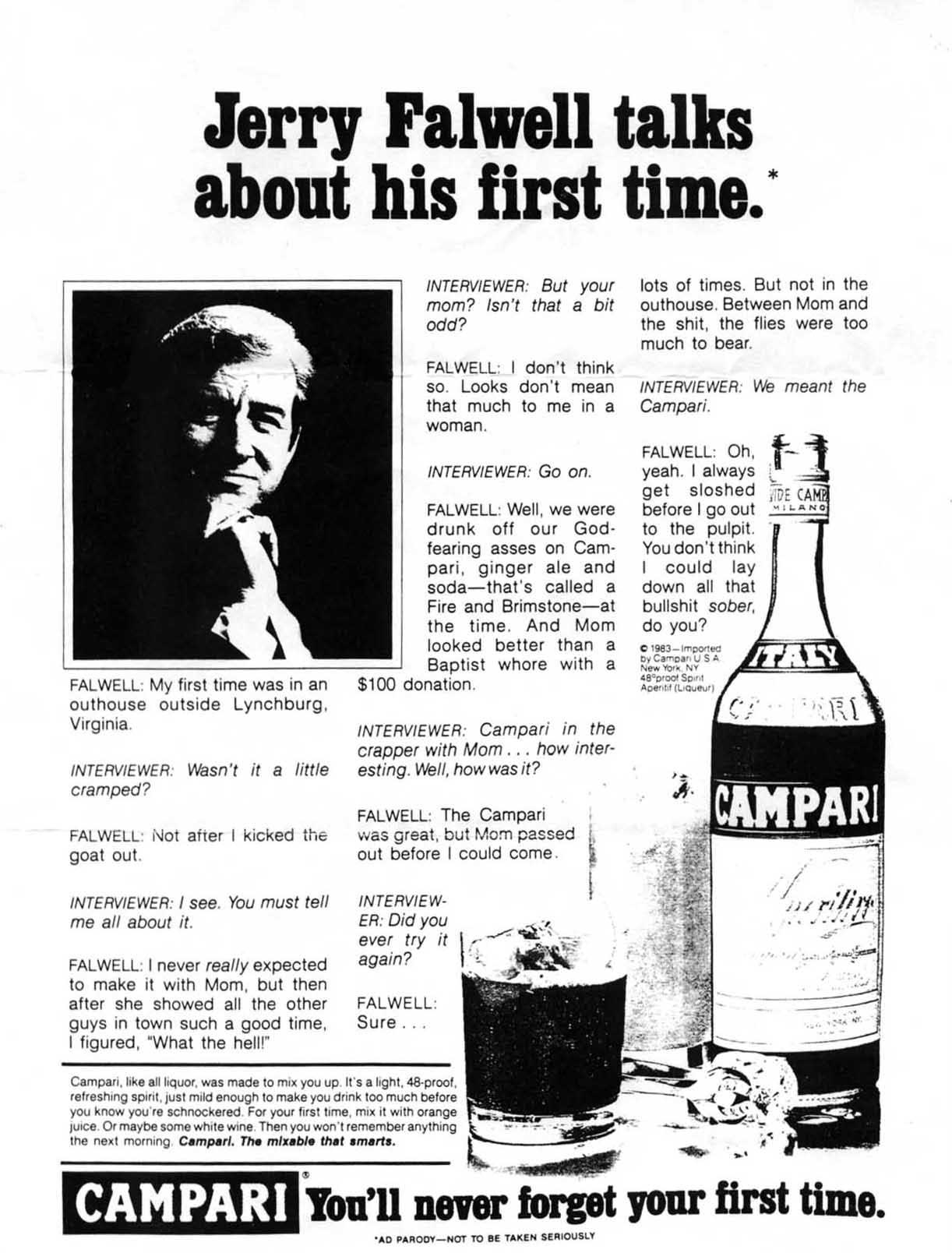
Upon hearing of this furore, the first thing that came to mind was when Jerry Falwell sued Hustler Magazine for 'emotional distress', after a spoof Campari advert implied that he had, well, a not-so-mild case of the Oedipus complex. The US Supreme Court saw sense and ended up throwing out the case.
It all goes to show that the British have satire instead of revolutions - one of the better traditions passed down to us all.
The much-loved Wellington freebie weekly, the Capital Times, published its final edition last week, becoming the latest casualty of a changing media landscape and a flat local economy.
It filled in for the much missed City Voice after its editor moved back to Auckland, and covered a range of local issues that were largely glossed over by the mainstream dailies. Grant Buist's Jitterati cartoons never ceased to entertain, and he hopes to continue the series online.
The Capital Times didn't get more Wellington than this, and it's going to leave big shoes to fill.
Margaret Thatcher (1925-2013)
The Iron Lady was never for turning, but the ageing process was one enemy she could never fight. To her supporters, Thatcher rescued Britain from irrelevance and industrial paralysis, and reforged it as a financial superpower. To her detractors, Thatcher destroyed British industry and the livelihoods of millions. In any case, she remains a polarising figure in Britain and abroad, even in death, and the various rituals celebrating her death illustrate that. Thatcher seemed unstoppable - until she implemented the infamous Poll Tax, which provoked riots all over Britain, and a leadership challenge which she risked losing until she jumped.
The Boston Bombings
A series of explosions struck the famed Boston Marathon just after the finish line was crossed, shaking Americans' sense of security once again in the wake of Aurora and Sandy Hook.
So far, no one has claimed responsibility, but initial analyses by terrorism experts lean toward the theory of a domestic or lone wolf attack, given the amateurish engineering of the bombs, and that the explosions happened on Patriots' Day and almost coincided with the anniversaries of the Waco Siege and the Oklahoma City bombing. That hasn't stopped the usual suspects from jumping to conclusions: Alex Jones thinks it's an FBI false flag plot, Alan Jones blames 'left-wing radical students', and Pamela Geller and Robert Spencer blame the Muslims. Plus ça change, plus ca même chose.
Not surprisingly, the usual anti-PC suspects are kicking up a stink and hoisting themselves on their own petard. I'll leave The Young Turks' Cenk Uygur - a fully-recovered faith-based dogmatist - to do the deconstruction for us.
When I'm not grinding in the latest Warcraft patch or surviving Planet Pandora, there have been no shortage of issues that have had me resisting the temptation to break my screen in half of late. The ongoing Novopay debacle, charter schools, university cuts, the Mighty River Power fire-sale, golden handshakes, socialism for the rich and austerity for the rest, holiday highways, all-round anti-intellectualism... you name it.
But those are for another post. So, to lighten the mood...
2012 has come to a close, and we're still waiting for the doomsday predictions in the Mayan calendar. With all that aside, here's to 2013.
The Mega Conspiracy & Pacific Fibre
Kim Dotcom appears to have started turning the tables on the MAFIAA and its hangers-on. He's won the right to sue the authorities involved, And his latest venture, simply named Mega, is not too far off.
More interestingly still, he's thought out loud of resurrecting the Pacific Fibre proposal, which was abandoned by its original backers due to insufficient capital. One of my customers has theorised, with some justification, that Pacific Fibre was just an elaborate warning shot to Telecom's Southern Cross Cable. Given that NZ's internet traffic is largely global, a second undersea cable is probably a more pressing priority than a domestic fibre network. Dotcom's proposal to enact it in practice remains to be seem.
Journalism vs churnalism
The Leveson Inquiryreported back its findings on the Hackgate affair, and it's recommended a new independent regulatory agency. Needless to say, it's caused some polarisation. Hacked Off, the NGO representing those whose privacy has been invaded by the News of the World and other tabloid outlets, are in support. More interestingly still, support for Hacked Off came from the most unlikely quarter - Salman Rushdie. Reporters Without Borders favours a proceed with caution approach. Closer to home, the Law Commission has explored similar territory but for different reasons.
Critics of the Leveson Inquiry suspect it's a slippery slope to state control of the British media, and therefore, censorship. Such negative reactions have tended to come from those profiting handsomely from sensationalism, who argue they're just meeting public demand. Additionally, they tend to gloss over the incestuous relationship between politicians, law enforcement and tabloid reporters that characterised Hackgate. Kenan Malik has a far more nuanced argument against the Leveson Inquiry - that it attacks the symptom rather than the toxic culture underpinning publications like News of the World. Sir Joh's Queensland is a case in point of what could happen when media regulations are misused for outright censorship.
A free Fourth Estate is vital to holding public figures to account, but Hackgate has exposed the ethical bankruptcy of many media proprietors. In fact, Hackgate was exposed in the first place by Nick Davies of The Guardian, through good old-fashioned investigative journalism. A Press Council/BSA structure with much sharper teeth would be ideal, particularly where rulings tend to be buried on a sidebar in page 9. The closest match would probably be Denmark and Finland, which have been ranked at the top of Reporters Without Borders' Press Freedom Index but still have official statute underpinning it. The rise of the blogosphere adds another dimension into the mix, but chances are it won't displace traditional media just yet.
Gun politics
The spree killing of primary school kids in Sandy Hook, Connecticut by a mentally unhinged young man re-ignited the gun politics debate in America - still raw from the Aurora shootings and the Trayvon Martin incident - with conflicting reports on whether the National Rifle Association was gaining or losing members. It was too much for even Rupert Murdoch. And the Sandy Hook shooter's mother - herself one of the victims - was a 'prepper' survivalist who died in the most ironic manner - her own cache of guns ended up being used against her. And preppers are the very people that NRA president Wayne La Pierre appeal to.
Things came to a head when CNN anchor and former Daily Mirror editor Piers Morgan went ballistic on Gun Owners of America president Larry Pratt. Morgan isn't renowned for his subtlety or good character, but he wasn't afraid to call a spade a fucking shovel on the Sandy Hook tragedy. Despite a petition to have him deported from the States, Morgan has refused to get cold feet. And if it's anything to go by, Pratt makes the NRA look like Mahatma Gandhi. He's hobnobbed with white supremacists and religious fundamentalists in the recent past, despite denials to the contrary.
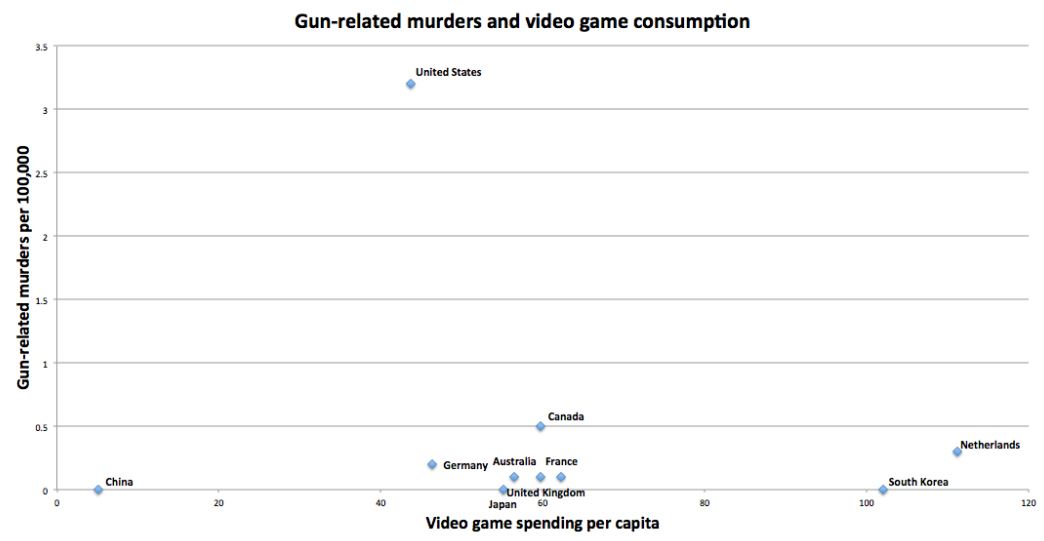
Video games and movies have long been scapegoated by gun lobbyists for spree shootings. Yet other industrialised nations play the very same games and watch the very same movies that the Americans do, and still have much lower gun homicide rates - and general homicide rates for that matter. Michael Moore had a point in Bowling for Columbine when he observed that Columbine shooters Eric Harris & Dylan Klebold were ten-pin bowling enthusiasts, so should bowling be banned because it makes people go on spree shootings? The classic Hitler Ate Sugar fallacy never seems to go away.
It's also far easier to kill with an automatic rifle than with a knife. A deranged man in China attempted to stab a couple of dozen school kids earlier this year, yet there was not a single fatality.
So why are automatic firearms legally allowed to be purchased domestically in America, but not other industrialised nations? Certainly not for hunting - even a powerful enough 12-gauge can bring the angriest grizzly bear to heel. And not one of these rifles has known to be used in self-defence - pistols usually have that covered, and even then that's been the exception rather than the rule.
Outside of the battlefields of Afghanistan and Normandy, there's a school of thought that the real purpose of possessing assault rifles is survivalist paranoia. Specifically two reasons: overthrowing a "tyrannical government", which was a real threat when the 2nd Amendment was drafted in 1776, but comes across as conspiracy theory fantasy today; and race war, one of the primary fears of a chauvinist born-to-rule order facing the weakening of its monopoly on power.
2 + 2 = 5
The Novopay debacle continues to leave teachers in the lurch, and for good reason. Already, the Education Secretary Lesley Longstone has resigned, not long after she was parachuted into the role from Britain. Education Minister Hekia Parata effectively continues to deny responsibility, blaming everyone but herself.
In true Orwellian fashion, the ruling Government's promises to reverse the "brain-drain" in 2008 with tax cuts has been double-spoken into a "brain exchange". NZ has always had restless youth visiting and working overseas, and often returning and bringing back valuable know-how. But to imply that taxation alone drives talented NZers overseas is a cynical exercise in saying black is white, given we're at the lower end of the OECD taxation scale. Even if NZ reduced its taxation levels to that of, say, Monaco, NZers would still go overseas. For the simple fact that there are only 2 degrees of separation among us, and we've long been a couple of small islands in the middle of a large natural moat. We'll never be London or Los Angeles or Sydney, and nor should we delude ourselves that we can pray to the cargo cult and become them.
We can, however, carve our own niche in the wider world. The Internet has reduced our distance to the world and fostered innovation somewhat, but it's still at the whim of a cartellised communications sector. And the prevailing economic orthodoxy in NZ goes a long way to explaining NZ's relatively high living costs - it's not really pro-business, but pro-cartel. Those who conspire to keep it in place would do well to read Book I, Chapter X, Part II of Adam Smith's The Wealth of Nations:
"People of the same trade seldom meet together, even for merriment and diversion, but the conversation ends in a conspiracy against the public, or in some contrivance to raise prices. It is impossible indeed to prevent such meetings, by any law which either could be executed, or would be consistent with liberty or justice. But though the law cannot hinder people of the same trade from sometimes assembling together, it ought to do nothing to facilitate such assemblies; much less to render them necessary."
I've previously posted about my satirical efforts ruffling feathers. Recent complaints about Powershop's latest "same power, different attitude" advert have prompted me to go into further detail on the phenomenon known as 'anti-PC gone mad'. The Powershop advert in question depicts the Pope marrying a same-sex couple, in keeping with the company's irreverent themes of free consumer choice. It's gotten up the nose of the local Catholic Church, Family First, and anti-abortionists, among others. Which is a bit rich, given Family First especially has made its raison d'être to complain about PC gone mad destroying society.
Not too long ago, there were whines about 'political correctness gone mad', in which a reasoned debate couldn't be engaged without accusations of redneckery or wowserism. If anything, the pendulum has swung to the opposite extreme - it's difficult to engage in a debate without being labelled 'politically correct' or a 'bleeding heart', or words to that effect. It's like an echo of Senator McCarthy's Red Scare witch-hunts, if not a direct descendant.
The anti-PC gone mad brigade have been egged on by reactionary sympathisers in talkback media like Rush Limbaugh - who reputedly made the term 'political correctness' infamous - although the phone-hacking scandal that derailed the News of the World, and the subsequent Leveson Inquiry, could prove a turning point.
To name just a few examples of anti-PC gone mad:
Massey university scientist Mike Joy has copped flak simply for being a bit too honest about the state of New Zealand's rivers. PR hack Mark Unsworth has compared him to the 'foot-and-mouth disease of the tourism industry', and blogger turned Truth NZ editor WhaleOil has called for him to be taken to the firing squad for 'economic sabotage'. Talk about attacking the symptom.
Actors' Equity official Todd Rippon has been sacked as a tour guide on the basis of rumours alone, in the wake of the Hobbit industrial controversy.
Paul Henry's departure from TVNZ's Breakfast in 2011 over his dissing of Sheila Dikshit and Anand Satyanand split the nation down the middle. People either thought Henry was a victim of PC gone mad, or they thought he made the nation look like backwater hicks.
A safe sex advert in Brisbane - and a perfectly SFW one too - was removed after a complaint by the Australian Christian Lobby, much to the disgust of almost everyone else.
A 7-year-old girl put in the naughty corner because her parents opted out of a fundamentalist religious studies class.
A more laughable example of anti-PC gone mad is the American Family Association's Web site filter, which notoriously invoked the Scunthorpe problem by replacing every occurrence of 'gay' with 'homosexual'. As a result, an article on athlete Tyson Gay was instead about 'Tyson Homosexual'.
Another laughable example: the reaction of fundies to any billboard by St Matthews in the City in Auckland. They seem to dismiss it as not being a real church, when their own churches are often of the nouveau riche mega-church variety.
Taken to its logical conclusion, anti-PC gone mad has, in very rare cases, gone as far as mass political murder. And when it happens, the usual suspects, in typical No True Scotsman fashion, simplistically dismiss it as the kind of thing only Reds and Koran-thumpers do. Anders Breivik and Timothy McVeigh come to mind.
Video blogger Moviebob has deconstructed anti-PC gone mad in his Big Picture video, "Correctitude". Closer to home, Steve Kilgallon described urban myths being taken as fact - such as Baa Baa Black Sheep being renamed Baa Baa Rainbow Sheep - to the point where "they're all rubbish, but 1984 has finally come to pass: we're all stupid enough to believe them". Libertarian writer Jim Peron, who lived in NZ for a few years and is no fan of political correctness himself, has previously written of a "new anti-PC problem".
So, what do haters of 'political correctness' hold sacred? The most obvious answer is a 1950s utopia which never really existed to begin with. A utopia where petrol grows on trees, everything was stable and whitebread, mum stayed home in the car-dependent suburbs to raise the kids, dad brought home the bacon, everyone saluted the national flag and put their trust in the police and military, society's misfits were out of sight and out of mind, and the 'civilised and savage' were clearly identifiable. More likely, it was some kind of Stepford paradise that couldn't last, as the upheavals of Vietnam, Watergate and economic globalisation in the subsequent decades illustrated. Black-and-white solutions no longer worked in a world increasingly shaded in gray.
If there's one common thread tying the anti-PC gone mad brigade together, it's a sense of preserving the old born-to-rule order at any cost. Anti-PC gone mad, it seems, is the new PC-gone-mad - it has effectively become what it hates.
Last Sunday's Voyage of a Lifetime seminar, hosted by the local Fabian Society, went down well at Wellington's Downstage Theatre. I had hoped to video the whole thing, until my camera displayed a heat warning and powered off - the first time it's ever done so. But with about 250 people crowded into a theatre on a sunny day, it probably wasn't surprising. Russell Brown was MC for the event, and Keith Ng - fresh from his exposé of unsecured WINZ kiosks - was also in attendance, as were Zippy Gonzales and my workplace's landlord. Michele A'Court kicked off the event as a stand-up comic would and should.
(Note: the video is from the Auckland event from several months earlier, but the themes were similar for Wellington.)
The seminar drew on analogies between the ill-fated Titanic voyage and New Zealand's struggle to achieve its full economic potential. There were various topics discussed that have barely been debated in mainstream media:
Rick Boven (formerly of the NZ Institute) explored ecological limits and resource depletion, and the seeming inability or refusal of major organisations - governments and businesses alike - to adapt.
NZMEA's John Walley explained the Dutch disease, in context of NZ's dairy industry and the property bubble.
Bernard Hickey raised the issue of household debt in the midst of an obsession with public debt, as well as quantitative easing, and the world's billions of hoarded wealth not being put to productive use
Rod Oram recounted NZ's over-reliance on agri-business, and the 'good' and 'bad' types of foreign direct investment
Selwyn Pellett related to the disconnect between innovation and commercialisation, from his own experiences as a tech startup founder
Arena Williams (Auckland University) and Rory McCourt (VUWSA) touched on intergenerational and wealth disparities.
Afterwards, I got to ask the panellists some interesting questions. I had the opportunity to suggest The Pine Tree Paradox to Selwyn Pellett, and the author's suggestion of Stanford University setting up shop in NZ.
I also caught up with Russell Brown again, this time to discuss the finer points of demographic vagaries. Some of us had come to the observation that Fabian attendees tend towards the (shrinking) comfortable middle classes, but there are still people like myself who don't quite fit the income bracket and yet still identify with Fabian ideals. He concurred with my view that there's no point in keeping up with the Joneses because they've been declared bankrupt, their McMansion foreclosed, and their Range Rover repossessed.
I told Rod Oram about a David Smick column in the Washington Post in which the prevailing globalisation model was breaking down with nothing obvious to replace it, and asked him what he believed the replacement would be. He didn't pretend to have all the answers, but we both agreed that 3D printing was one potential avenue for re-localisation, and hence a reduced dependence on the globalist model.
We also discussed where the line should be drawn between New Deal-esque regional development and pork-barrel politics - both of us agreed that the Puhoi-Wellsford Holiday Highway and the Gravina Island Bridge are pork-barrel projects with poor returns on investment. I theorised that the big difference is whether the benefits of such projects are shared by the many or the few, with Oram saying the Clifford Bay ferry terminal proposal was a complex case.
Bernard Hickey reliably informed me that his new Journalism.org.nz project isn't too far off, with an expected launch early in the new year. He's a particularly relevant player in the economic debate, given that up until a couple of years ago, he was an unabashed apologist for the Wall Street globalist orthodoxy.
Seminars like these have been done before, but they've never been more relevant in light of the Great Recession, and the turning of the global financial system on its head.
I've been to Pandaria for the past few weeks, and there's no shortage of stuff to do. Still, certain current events have been too big to ignore.
In wake of the Innocence of Muslims political forgery that was posted on YouTube, a hate speech poster campaign by the American Freedom Defense Initiative -- led by none other than neo-crusader lieutenant Pamela Geller -- goes to show that the neo-crusader movement has learned little or nothing from Anders Breivik, instead reinforcing its state of denial. Jewish American organisations have been among the strongest critics of the posters. Even Fox News saw fit to blur out the word 'savage' when it broadcast the story. (Warning: you may have to resist the temptation to do physical damage to your monitor, just from looking at the poster.)
A court injunction from the NYMTA initially halted its posting in the subways of New York and San Francisco, but a subsequent appeal by Geller and her cohorts allowed it to proceed on the grounds of free speech. Egyptian-American journalist Mona Eltahawy was nabbed by Transit police for spray-painting over one of the posters, in defiance of a Geller loyalist attempting to obstruct her. However, anti-hate activists -- Christians no less -- then came up with the idea of directly counteracting Geller's posters with their own ones.
That is probably the best possible antidote to hate speech - elevating equal and opposite free speech to the same level, instead of outrightly censoring the hate speech. The pedlars of hate speech have traditionally had the backing of big money, governmental authority, or both. But with the advent of crowd-sourcing, that monopoly on power can be challenged.
It's been exactly a year since Anders Behring Breivik shattered Norway's peace and carried out 77 political murders of mostly youths, for which he remains unrepentant. His actions were intended to send Norway's leaders into a state of panic, but the one good thing to come from the killings was that Norway instead kept calm and carried on.
With the trial nearing its end and deciding whether he's insane or not, attention has been turned to the company he kept, and most agree that he has a streak of narcissism not unlike that of convicted murderer Clayton Weatherston. Yet although Breivik is clearly an apostle of the extreme Right, he doesn't completely fit the familiar stereotypes.
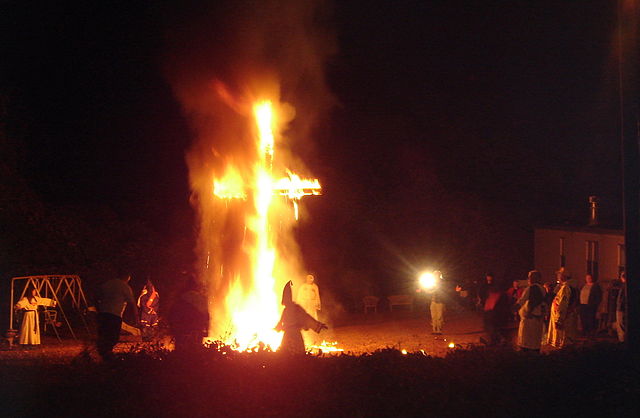
Not too long ago, it was easy to identify the extreme Right - white hooded robes, burning crosses, shaven heads, Nazi swastikas and SS uniforms. In recent times however, the extreme Right has splintered and evolved, and there are now 3 distinct camps.
The first camp are the purists, who are made up of the traditional "Sieg Heil" extremists we're familiar with. It seems that when history repeats, the first time it's as tragedy, the second time as farce. In our grandparents' generation, Hitler, Mussolini and Tojo threatened democracy within an inch of its life. Nowadays, the likes of the National Front in NZ are commonly regarded as clowns or sad sacks. However, holdout KKK activity can still be found in parts of America's backwaters. And there's nothing to joke about David Copeland's nail bombing spree in London or Timothy McVeigh's bombing of Oklahoma City. Many mass killings carried out by this camp in recent history, including those by Copeland and McVeigh, were directly inspired by the infamous hate-speech novel The Turner Diaries.
The second camp is made up of anti-Semitic pragmatists. Although not a large group, they've still made the news for all the wrong reasons. They are typically made up of neo-Nazis and Islamic extremists who collaborate out of a shared anti-Semitism. The most obvious example that comes to mind is the chess prodigy Bobby Fischer, who, despite having a Jewish mother, openly disowned that side of his heritage. He was also an avid reader of Mein Kampf and the Protocols of the Elders of Zion, and openly praised the actions of Osama bin Laden and the 9/11 hijackers. Other examples include Nation of Islam leader Elijah Muhammed and American Nazi Party founder George Lincoln Rockwell, who both met in the early 1960s on good terms. Later on, Muhammed's successor Louis Farrakhan and KKK wizard Tom Metzger had a similar meeting in the 1980s.
The third camp are also pragmatists, but with a counter-jihad focus, and easily have the most powerful public influence. This camp, which made its presence felt after the end of the Cold War and the beginning of the War on Terror, includes militarist neo-conservatives, religious fundamentalists and disaster capitalists. They employ the use of spin doctors and think tanks instead of raw violence and intimidatory fashion sense. The overriding theme with this group is that the West is an endangered species at the mercy of Muslim hordes and other anti-Western fifth-columnists, and must resort to lethal force for its very survival - even verging on a 'Protocols of the Elders of Mecca', just as the Elders of Zion was used to justify the Holocaust. There is also a strong sense of 'honorary Aryanism' - I refuse to use the euphemism 'model minority' - as the likes of Michelle Malkin go to show. Even the British National Party and the French National Front appear to have evolved from the first camp to the third in recent years, reputedly accepting into their ranks Jews and other minorities who share their anti-Communist and counter-jihad views.
Which brings us back to Anders Breivik. He has been known to hobnob with Christian fundamentalists, neo-Nazis and hyper-nationalists on Web forums and in person, yet he's never been a doctrinaire adherent of any of these groups. Breivik has also claimed to gather like-minded followers across Europe into a new Knights Templar movement. If anything, he represents a new strain of extremism that appears to be inspired by Samuel Huntington's Clash of Civilisations - an extremism which could be best thought of as neo-crusaderism. Norwegian defence analyst Thomas Hegghammer has referred to it as macro-nationalism:
On closer inspection, however, Mr. Breivik’s worldview does not fit
squarely into any of the established categories of right-wing ideology,
like white supremacism, ultranationalism or Christian fundamentalism.
Rather, it reveals a new doctrine of civilizational war that represents
the closest thing yet to a Christian version of Al Qaeda.
For example, although Mr. Breivik says he fears “the extinction of the
Nordic genotypes,” racial hygiene is not high on his agenda. He wants to
expel, not kill, Muslims in Europe, and he does not mind Jews and
non-Muslim Asians. Similarly, while Mr. Breivik says he is “extremely
proud” of his “Odinistic/Norse heritage,” he is not a Norwegian
nationalist — his “declaration of independence” applies to all of
Europe. And while he is Christian, he admits that “I’m not going to
pretend I’m a very religiousperson.”
Instead, Mr. Breivik’s goal is to reverse what he views as the
Islamization of Western Europe; indeed, he sees himself as a soldier in a
defensive war against “Islamic imperialism.” In his view, Muslims are
colonizing Europe, helped by high birth rates and a doctrine of
multiculturalism advocated by the European elite. Islam, for him,
represents an existential threat to European civilization, a threat that
must be countered at all costs. The best way to do so, he argues, is to
wage war against “cultural Marxists” — his label for the European
political and intellectual elite — because they are the traitors who
allow the colonization to take place.
To be fair, France and the Netherlands have recently grappled with the issue of Muslim integration, or lack of it. The burqa (headscarf) ban has proven controversial in France, and the Netherlands was rattled by the assassinations of outspoken anti-Muslim figures Pim Fortuyn and Theo van Gogh, and the death threats against Muslim apostate and libertarian writer Ayaan Hirsi Ali.
The moment you cite not just Breivik, but also McVeigh, Copeland, Eric Rudolph, Ted Kaczynski and other terrorists who look like us, a common response goes something like, "Stalin and Pol Pot killed millions more people!" While numerically and historically true, such responses fail on two counts.
The first count is Godwin's Law and its corollaries, whereby a debate starts devolving into comparisons with Hitler or Stalin, and often the associated use of 'fascist' and 'communist' as cheap-and-nasty epithets.
The second count is the No True Scotsman fallacy, which in this case gives the impression that the neo-crusaders are downplaying extreme-Right atrocities while at the same time overplaying Communist atrocities, in order to shoehorn their arguments into their world views.
The No True Scotsman fallacy also applies to the typical neo-crusader response to Breivik's trigger-happiness, where they basically went from saying "Westerners don't do terrorism", to "real Westerners don't do terrorism." When it emerged that Breivik was responsible for the Oslo bombing and Utoya Island shootings - and not a Muslim jihadist as columnists like Jennifer Rubin prematurely concluded - many of the neo-crusaders, including those who were favourably cited in his 1500-page manifesto, either kept silent, denied all knowledge, or attempted to justify his actions. At the extreme end of the scale, FOX News commentators Glenn Beck and Debbie Schlussel went as far as tacitly defending Breivik and comparing his victims to Hitler Youth, and Pamela Geller tellingly deleted a 2007 post on her blog from a "Norwegian admirer" who planned to stockpile weapons. Frank Gaffney thought out loud that Breivik's attacks were a false flag operation intended to discredit the counter-jihadists. More recently, Kevin Forts, a New England undergrad and penpal of Breivik, openly endorsed the attacks in a live TV interview.
Among the more measured responses were from neo-con stalwarts Daniel Pipes, Geert Wilders, and Robert Spencer, who openly condemned Breivik's actions and conceded it would set back the cause of the neo-conservative movement. Australian academic Keith Windschuttle - who spoke at a neo-conservative symposium in NZ in 2010 - was "still at a complete loss to find any connection between them and the disgusting and cowardly actions of Breivik." Windschuttle went on to say that "it would be a 'disturbing accusation' if people thought that he had
ever used deliberately provocative language that might have caused
Breivik to take up a rifle and shoot unarmed teenagers in cold blood."
Given the strong representation of hardline Zionists among the neo-crusaders, it's ironic that they would invoke the kind of inflammatory rhetoric that was used to drum up support for the Final Solution. It brings to mind Nietzsche's famous warning, "he who fights monsters should be careful not to become a monster himself." Jewish commentator Irving Greenberg wrote in 2003 of his close friendship with Jewish hyper-nationalist Meir Kahane, and their later falling-out when Kahane jumped off the slippery slope. In many ways, Kahane was the godfather of modern neo-crusaderism. Greenberg stated (my emphasis):
The alienation between us began to grow, however, as his policies became
more extreme. In 1972, when I was teaching at City College of New York,
one of my students was arrested by the FBI for placing a bomb in
mega-entertainment agent Sol Hurok’s office, to punish Hurok for
sponsoring a Soviet artist’s concert tour in America. The bomb killed a
secretary. In my conversations with the student he made clear that he
believed he had acted under the inspiration of Meir Kahane and even
hinted that my old friend had encouraged the bombing, though the FBI
never proved anything. When, during an encounter with Kahane, I accused
him of possible responsibility for the secretary’s death, he argued that
“never again” meant “never again at all costs” — including the use of
force and violence.
We met again years later, for yet another debate. Kahane had made
inroads, particularly in the Yeshiva University student community, by
cloaking his proposals for elimination of the Arabs with rabbinic
sources. Rabbi Avi Weiss, who was a friend of both of ours, came to me
and asked if I would debate Kahane. I felt that his ideology and
incorrect use of rabbinic sources needed to be challenged — he was a bad
influence on Y.U. students. So I agreed to debate him at the Hebrew
Institute of Riverdale, the synagogue headed by Weiss.
The week before the debate, an interview with Kahane
appeared in the Baltimore Jewish Times. The report was horrific. He
called for the transfer of the Arab population of the West Bank. As I
recall it, he spoke of bringing trucks and rounding up the population —
men, women and children — and depositing them in Jordan. When asked by
the reporter what would happen if they refused to go, Kahane replied: We
will shoot them if they resist.
In effect, neo-crusaders have an outlook that's not much different from the Mahmoud Ahmadinejads and Osama bin Ladens they purportedly despise. With the economic turbulence of the period following the Global Financial Crisis of 2007 - the biggest since the Great Depression - there has unfortunately never been a more fertile patch for political extremism of all stripes since the 1930s. Yet I'm hopeful that it's not too late to stop the hate.